Frontier AI & Systems · CH / NLFrontier AI Systems · GPU Kernel & KV Cache Architecture · Zurich · Amsterdam
Ribbsaeter Systems builds serious systems.
Founder-led systems engineering, GPU memory hierarchy optimization, and production software for frontier AI labs and serious engineering teams. Proven directly upstream across OpenAI Triton, LLVM, Meta Velox, and DuckDB.
The studio is positioned around production software: the tools, workflows, and customer-facing platforms that have to look sharp and work under pressure.
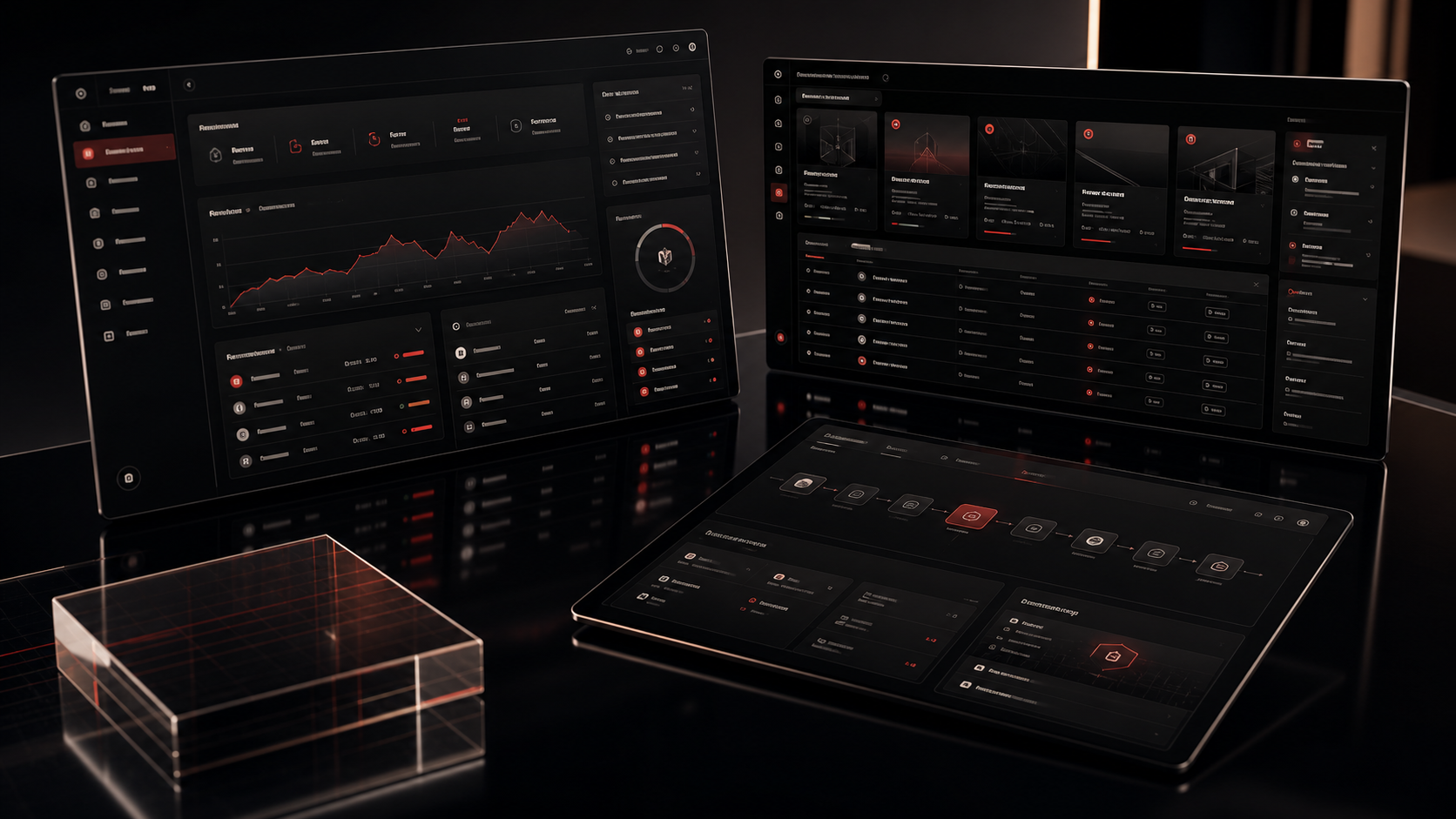
Operational interface
A visual language for the kind of dashboards, portals, and approval systems that run daily business operations.
01
Operational platforms
Client portals, admin systems, booking flows, approvals, dashboards, and internal tools designed around real operating pressure.
02
Frontier AI & GPU Systems
GPU kernel fusion, KV cache memory engineering, CPython 3.14t free-threading, and high-throughput inference runtimes for production clusters.
Premium, SEO-aware web experiences with strong technical foundations, fast loading, structured metadata, and conversion paths.
04
Product foundations
MVPs, rebuilds, integrations, and infrastructure decisions made for maintainability rather than short-lived demos.
Ways to engage
Four ways to move from problem to production.
Start with the outcome—not a menu of technologies. We can optimize your GPU clusters, own a complete product, build the AI and automation layer, or work inside your existing team as the senior engineering partner.
01
Frontier AI & GPU Performance
Surgical GPU memory hierarchy, KV cache engineering, custom Triton/CUDA kernels, and low-latency inference architecture for frontier labs and enterprise clusters.
Need a specialist capability? Our detailed service pages cover design, development, AI, cloud, maintenance, startup delivery, and private agents without turning the homepage into a catalogue.
NIS2 readiness, AI security audits, shadow AI risk mapping, data leakage reviews and secure workflow assessments for companies adopting AI and operating critical digital systems.
Every project gets a structure that fits the real operating need: fixed budgets for defined scopes, time-and-materials for evolving products, weekly retainers for steady momentum, or a dedicated team for long-term ownership. Delivery timing depends on availability and final project scope.
Specialized Practice · Frontier AI Systems & GPU Performance
GPU Cluster & KV Cache Performance Sprint
A 2-week, founder-led surgical SWAT intervention on your GPU inference stack. We audit KV cache allocation, fuse custom handwritten Triton/CUDA kernels, eliminate Python GIL stalls, and merge production PRs directly into vLLM, SGLang, or custom engines.
A clear scope and total cost agreed upon upfront. Ideal when requirements are well-defined and you want reserved senior ownership around a focused build.
Predefined scope & deliverables
Commercial terms defined upfront
Milestone-based payments
Great for MVPs & small projects
Time & Materials
Most Flexible
Pay for the actual time and resources spent. Best when the product is evolving and you need reserved senior ownership across discovery, build, and iteration.
Flexible scope & priorities
Monthly invoicing by hours
Agile sprint workflow
Ideal for evolving products
Weekly Budget
Steady Pace
A recurring weekly engagement with reserved senior ownership. Keeps momentum high without the overhead of full-time hires.
Predictable weekly spend
Reserved team capacity
Priority task queue
Scales up or down weekly
Dedicated Team
Enterprise
A full team embedded in your workflow, managed by us but working as an extension of your company. Best for long-term production ownership.
Full-time specialists assigned
Direct communication channels
Long-term collaboration
Scalable team size on demand
Not sure which model fits? A 30-minute discovery call with a senior engineer will clarify scope, availability, risk, and the right engagement shape.
The studio builds the surfaces that move a business forward: customer portals, internal platforms, fintech workflows, automation systems, dashboards, and product experiments.
The demo library shows interface direction, sector range, and implementation taste. Project conversations focus on the workflow, constraints, risks, and build path.
These are pre-production website scaffolds—not finished client launches. They help a buyer choose a visual and structural direction before we adapt the content, flows, and technical requirements into a polished production build.
Start with a scaffold that feels close. We then review the business, iterate the design with you, replace sample content, refine every flow, and implement the production-ready website or platform.
Selected fixes, regression coverage and systems work contributed to publicly maintained open-source codebases. Built with repository-native architecture, deterministic test coverage, and strict local validation.
LLVM/llvm-project
COMPILER
Non-Power-of-Two Vector Integer Division
X86 code-generation improvement preserving vectorization for non-power-of-two integer division when every result lane is demanded.
Corrected TopNRowNumber in-memory execution to emit rows in ascending rank order within each partition, matching WindowNode and spilled partition execution.
Analytical query engine parser and plan invariant fix preventing null pointer dereference during PIVOT IN list evaluation with zero-argument row expressions.
Engine-level query execution correctness fix resolving nested schema nullability mismatches across aggregation boundaries in Apache DataFusion without plan disruption.
High-performance distributed in-memory store cluster routing fix correctly extracting hash slots for module and arbitrary-key commands without redirection loops.
Cross-platform slug sanitization ensuring Windows absolute file paths with drive letter colons correctly normalize to Claude Code double-dash directory encoding.
Edge runtime WebSocket protocol conformance fix ensuring rejected WebSocket handshakes fall back to raw duplex TCP streaming without socket descriptor leaks.
Next.js App Router client-side navigation recovery ensuring stale segment prefetch cache misses fall back to full-page navigations without blank viewport stalls.
Deterministic async concurrency synchronization preventing deadlock and lock poisoning when async_lock awaiters are cancelled prior to context execution.
Engineering standard & Nominative Fair Use: Production-focused upstream engineering with rigorous issue analysis, regression testing, repository-native implementation, and local validation. Organization logos and names are referenced under nominative fair use to identify upstream open-source codebases to which verified pull requests were submitted.
Principal systems engineer and founder building across the complete technology spectrum: low-latency systems runtimes, mobile applications, Next.js web platforms, and autonomous AI infrastructure across banking, healthcare, commerce, and enterprise software.
Premium software work starts with deciding what not to build. We are useful when the stakes are real, the system must last, and the buyer wants direct access to people who can design, ship, and maintain it.
Good fit if
+You need senior engineering without hiring full-time
+You value taste, speed, and production discipline
+You are building mobile apps, web platforms, AI agents, fintech, or enterprise systems
+You want direct technical ownership from first brief to launch
Delivery style
+Architecture and implementation led by senior engineers
+Clear estimates, project cadence, and production milestones
+Design, engineering, and AI workflow decisions connected from day one
Plain-language commitments. Real engagement terms. The four things every Ribbsaeter Systems contract holds true, whether we work directly with you or as the engineering partner for your agency.
01
Flexible engagement terms
Direct client projects, white-label agency builds, fixed scopes, retainers and dedicated teams — so the contract fits the relationship and the work.
02
End-to-end ownership
Discovery, design, engineering, QA, deployment and post-launch maintenance handled by one in-house team. No hand-offs between agencies, no scope gaps.
03
Senior-only, in-house
Every contributor is a full-time team member. No outsourcing, no junior hand-offs. This protects delivery quality, code standards, and direct communication.
04
Production-grade infrastructure
Automated CI/CD pipelines, unit and integration testing, staging environments, monitoring and zero-downtime deployments — shipped as standard, not as extras.
Process · Discovery, design, delivery
Three phases. Two-week sprints. One senior team.
A predictable cadence built around senior engineers, not project managers. Discovery turns the idea into a buildable plan; design shapes the user-facing surface; delivery moves it through two-week sprints with weekly demos.
01
Discovery
We map requirements, study the business context and research the competitive landscape to produce a buildable plan with a real estimate.
Key Questions & Goals
What is the idea behind the product?
How can we turn it into a viable product?
How much will it cost?
Steps We Take
01We help the client to define all project requirements
02We study the client's business goals
03We run basic research of the market, direct and indirect competitors
04We prepare an estimate based on what we learned
02
Design
We translate the plan into low-fidelity wireframes, then high-fidelity UI — optimized for both end-users and the engineering team that will build it.
Key Questions & Goals
A product that will suit end-users in terms of design and functionality
A design optimized for the future development
A design that can be used for budget and deadline estimate
Steps We Take
01We create a project mind map and design low-fidelity wireframes of the most complicated flows
02We prepare a concept of the project — 2–3 screens or pages and a presentation
03We finish off the designs with weekly sprints
04Based on the finished design, we prepare a detailed development time and cost estimate
03
Delivery
Two-week sprints, in-built code reviews, automated CI/CD, weekly demos, and staging and production environments from day one.
Key Questions & Goals
In-built code reviews that help to maintain code quality
A team of IT professionals sharing communication and development standards
A product developed with the use of best industry practices
A flexible development process — we quickly adjust when your plans change
Steps We Take
01We start with setting up a scalable architecture that suits the project's needs
02We work by 2-week sprints and make a development plan for every sprint
03We prepare and submit sprint reports
Decision point
If the software matters, bring senior people in early.
We help teams turn unclear product, platform, and automation ideas into shipped systems without vendor sprawl, junior hand-offs, or noisy process.
Share the current situation, the outcome you need, and the practical constraints. A senior engineer reviews every enquiry and replies with a direct recommendation—not a generic sales sequence.